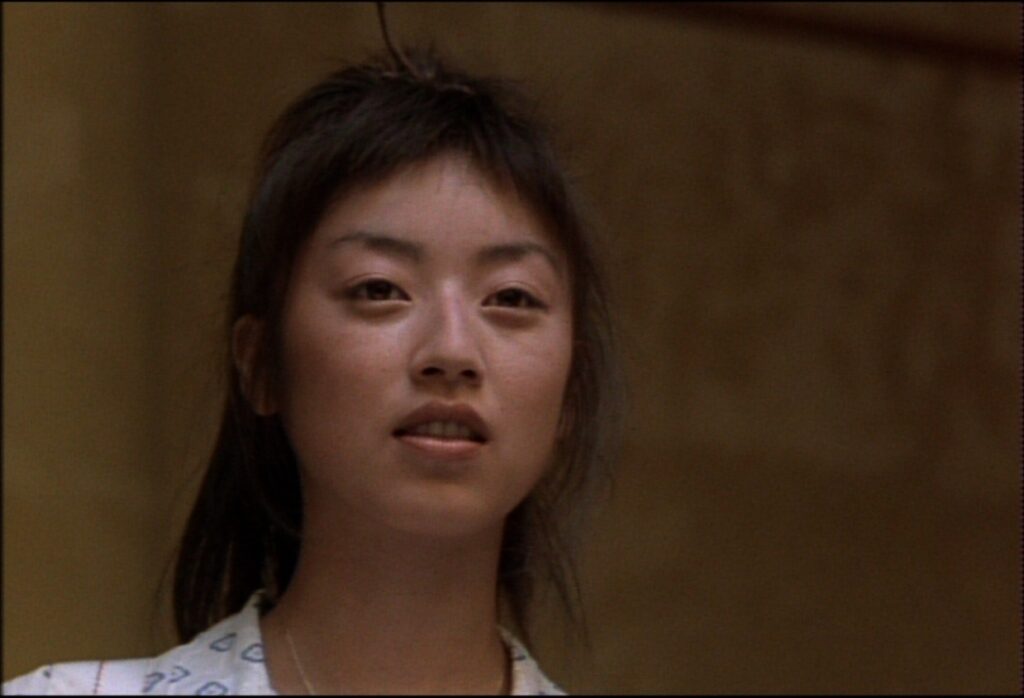
"KYOKO" is the story of Ryu Murakami, himself.
I used to think the story of “KYOKO” was like my own story. Thinking that, tears would come at all sorts of scenes in the work.
But one morning, just as I woke, on a sudden impulse, I tried fitting Ryu into “KYOKO.” And then — it’s a strange feeling — it was as though a puzzle piece clicked perfectly into place. That’s how it felt.
About ten days later, I got hold of The Complete Essays of Ryu Murakami, 1987–1991 (Kodansha Bunko), and in the last part — a conversation with the literary critic Masashi Miura — he had written the words “the story of myself.”
From "All the Essays of Ryu Murakami 1987-1991"
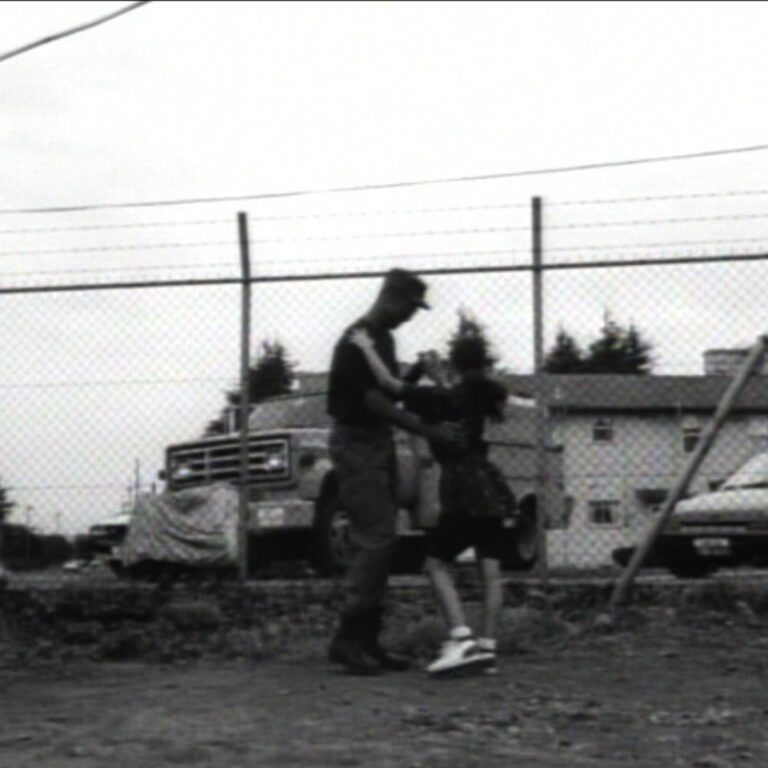
I realized this after I’d built the story — it’s about me, you see. The main character is a stripper. She was born in Fussa. She’s illegitimate — three generations of illegitimacy in the family. She was bullied for it, and then one day, when she was little, she meets a Black soldier across the barbed wire. The Black soldier says something like “Why are you crying?” — she doesn’t understand, but he was dancing this really funny dance. So she thinks, what a funny guy, and she laughs. That was the first time that child had ever laughed. She meets that Black soldier a few more times, and he teaches her things, like “You shake your hips like this.” It was so much fun for her that she kept going to play with him, all the time. Just dancing, that’s all. And during that, she hears him say, “In my country it’s like this,” and all kinds of images well up in her.
And when they part, he gives her his address: “I’m in New York, so come visit when you grow up.” She puts that address in a necklace, and rather than relying on teachers or parents, she lives by that address alone. In short, she lives with the joy her own body felt as her first priority. And she becomes a stripper. She lives doing something like porn shows.
* * * * * * * *
From then on, by the time the movie was completed, the story of KYOKO had changed to resemble a growing creature.
The opening of "KYOKO"
Prologue | Monologue Kyoko
Barbed wire.
The endless barbed wire fence, taller than I am, covers my memories
My parents died in a traffic accident when I was four.
My aunt and uncle took me in and raised me.
I grew up in a town with an American Army base.
I walked to kindergarten and school right next to the barbed wire.
On the other side of the barbed wire fence, I could see camouflaged military aircraft, a lawned U.S. military housing area, and the American flag.
And, the final part.
I like Cuba very much, but perhaps I am sure that it is not my final goal.
The moment I tell myself: that I have reached the goal, the future disappears.
When I am on the path of life’s journey, and I am enjoying it, I can have my future in my hands.
Even dying is not the goal (it’s like an accident) and fundamentally nothing has changed since my childhood, since I was a child when I walked along a barbed wire fence.
But, now, the barbed wire fence that I carried inside me at all times has disappeared.
So, in other words, I no longer have that feeling of being permanently away from what is most important to me.
I could find José in New York and the feeling had disappeared during the journey that carried him towards Miami.
It’s not just José, I met many people during this long journey, talking to them, and laughing with them, and then the feeling disappeared.
I can’t speak Spanish and my English isn’t very good, so I am not sure we understood each other.
We met, we crossed paths, that’s all. I was pursuing my goal and my path just crossed theirs.
I may be always on my way somewhere in my life.
It’s unsettling and unstable while I’m on my way somewhere, but I think it’ll probably work out.
Because the dance that José taught me is there, in my body, he lives in me.
And the barbed wire is gone.
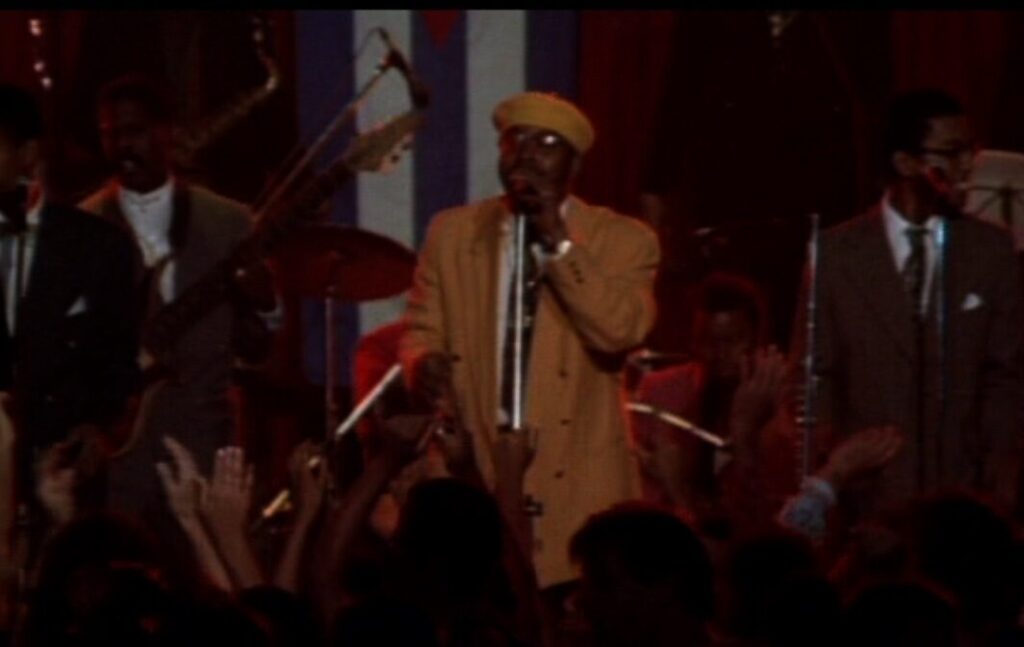
From “KYOKO”’s afterword (Shueisha)
All through the writing of this novel, I kept remembering the mood of twenty years ago. It was exactly twenty years ago, in autumn, that I wrote my debut work, Almost Transparent Blue, and I remembered that mood, which I had long forgotten.
In this novel there is no sex, no S&M, no drugs, no war. Ever since my debut work I had used those as motifs, as means of blowing self-consciousness away — but in this work there was no need for them.
From “ALL MEN ARE EXPENDABLE “
Around the time I finished editing the film, I wrote the novel Kyoko.
As I wrote, I kept remembering the time when I wrote my debut work.
It was as if I were writing a novel for the very first time in my life — that is how I wrote Kyoko.
This is different from writing “with a fresh feeling.”
I felt myself returning to the “spirit” I’d had when I wrote Almost Transparent Blue.
Whether for that reason or not I don’t know, but near the end of the novel Kyoko, the word “rebirth” comes up frequently.
It appears as the lines of a character named José, who is dying of AIDS — but as I wrote, I came to feel as if I myself were being reborn as a novelist.
Rebirth isn’t only coming back from the place of death.
In this case it might be better to call it evolution.
That is, a dramatic, explosive increase in one’s own store of information.
I say “information,” but some people call it “the world.” ← It’s easier to understand if you read “information” = “the world.”
I have always been starved for information, and I still am.
The information I’m talking about isn’t in Newsweek or CNN news or the internet.
It isn’t culture, or reportage.
Basically it’s bodily experience, something like practical philosophical material for survival.
“……You insert a pink vibrator into the anus, switch it on so it vibrates, and when you have sex via the vagina, the vibration of the anus travels into the penis……”
Reading something like that in a magazine and going “ah, I see,” self-satisfied — that’s the present state of this country.
A novelist’s first work holds all the information he had accumulated up to the writing of that first work.
After that, information keeps increasing and technique improves, but it’s often said one never surpasses the first work.
It’s not that I think Kyoko surpassed Almost Transparent Blue as a work.
If we’re talking about surpassing it as a work, Coin Locker Babies is more than enough.
Kyoko, as a sequel to the spirit of …Blue, regained the lyricism that was in my debut work.
That I returned to my debut work — not strategically — means that the information I’d input over twenty years had exceeded the accumulation of information from when I wrote that debut.
I think that’s an expansion of my capacity as a novelist, and it could not have happened if I hadn’t kept making films.
The world of “Ryu Murakami” widened. And that, I think, is because — in his relationship with “America” — he was freed from the barbed wire, the chain, that had always been in his heart.
So, probably, Ryu’s style changed from here. The conflict of “youth,” which had continued from Almost Transparent Blue, came loose, ended, and moved on to the next phase.
Recommended reading for understanding KYOKO (these are Japanese-language titles):
- KYOKO(集英社・幻冬舎・村上龍電子本製作所)
- KYOKOの軌跡-神が試した映画-(幻冬舎)
- 村上龍全エッセイ 1987-1991(講談社文庫)
- あなたがいなくなった後の東京物語(角川書店)
- アメリカン★ドリーム(講談社文庫)
- すべての男は消耗品である(村上龍電子本製作所・幻冬舎など)
- シボネイ-遥かなるキューバ-(主婦の友社)
- 限りなく透明に近いブルー(講談社・村上龍電子本製作所)
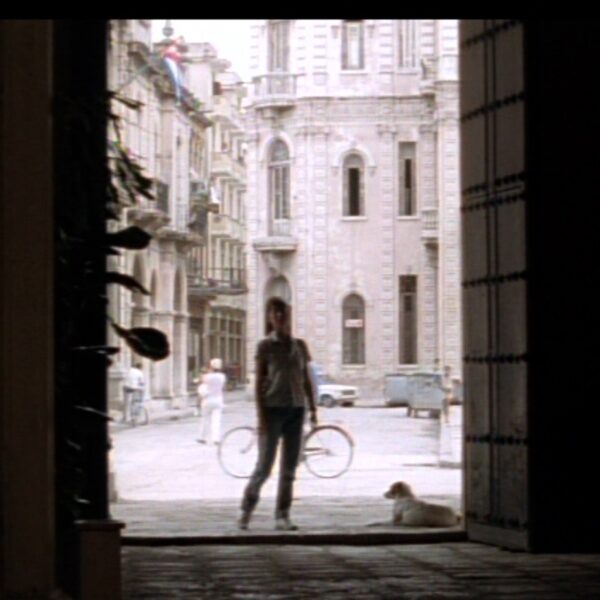
The New Other, Cuba
We come to know ourselves through our relationships with others, and with another new other, our previous relationships become objective.| Ryu Murakami from "KYOKO's trajectory"
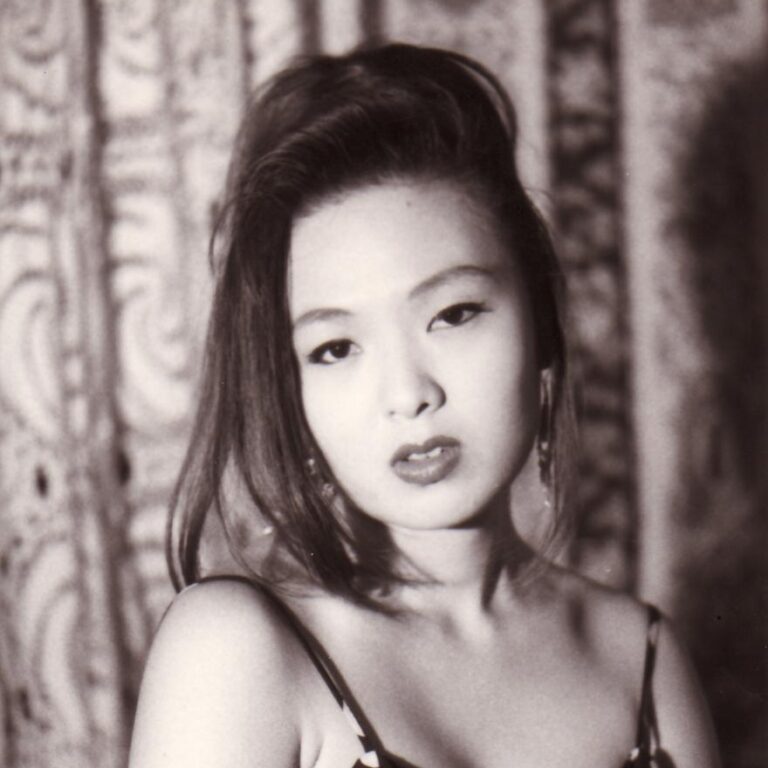
The “wounded Japanese” inside me
The ”wounded Japanese inside me'' was a "Japanese'' who felt a deep sense of guilt over the Pacific War, was unable to feel proud of his country, and was unable to love it. This is an essay that connects to “The New Other, Cuba“.
"KYOKO" is the story of Ryu Murakami, himself.
I felt myself returning to the"spirit" I had when I wrote "Almost Transparent Blue.''| Ryu Murakami