(Excerpt from “The New World Beat: A Guide to Pleasurable Cuban Music,” 1993)
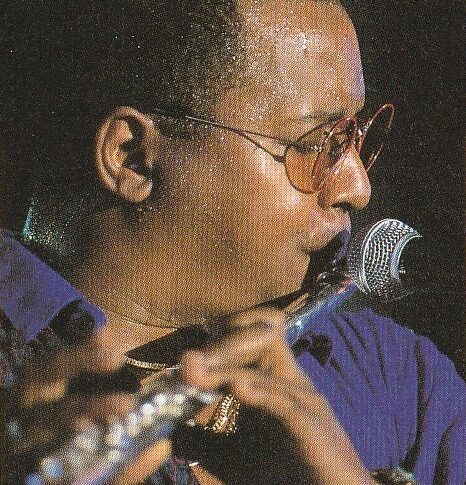
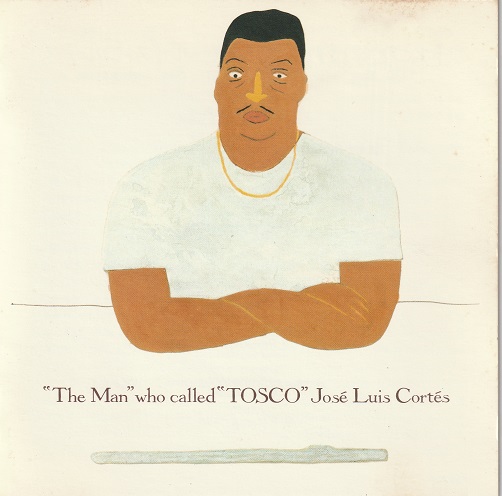
“He is my dear friend; the two of us call each other brothers. José Luis is a bandleader, songwriter, composer, arranger, and flutist (as well as a singer, dancer, and baritone saxophonist). He is world-class in every one of these roles, but as a flutist he is, without question, a genius—the best in the world, beyond anyone’s reach.
Countless times, while spending time with him, I’ve thought, ‘So this is what true talent looks like.’ Because he pays no mind at all to pleasing others, in Cuba he is misunderstood as a cocky upstart—but at his core he is incredibly kind.
When the album You Don’t Know What Love Is was recorded in Havana with the voice of Xiomara Laugart, he served as music director and did perfect work. I mean ‘perfect’ in the truest sense of the word. Drilled in the classics, he tosses off jazz as if it were nothing—almost as though sneering at jazz itself—a true child of music. And yet, they say, as a young boy he honestly agonized over whether to become a fisherman or a musician.
Today, the fusion of the African and the European—that is, the ‘New World Beat,’ the new music that will come after the classical—exists nowhere but inside José Luis Cortés. Whenever I tell him this, he always laughs, embarrassed, but he clearly carries a certain pride within him.
I love his favorite saying: ‘Don’t mess with me—I’m amazing.’
Born in 1951, in Villa Clara Province. His mother sang very well, though she was not a singer by profession. In 1965 he entered the ENA (National School of Art), majoring in violin, but partway through he switched to the flute. He studied the saxophone as well. From 1970 to 1980 he was with Los Van Van, where he learned what it takes to make an audience dance; Los Van Van performed José Luis’s own compositions, too. Then, in 1980, Irakere called for him, and he moved on. He is said to have practiced alone for several hours every day. The flute improvisations he left behind in his Irakere years are worthy of special note. He left Irakere in 1986, and in 1988 he formed NG La Banda.”