The U.S., The Defeat, American Standard Pops, and Cuban music.
This is the shared code that flows through him and me.
The Writer Ryu Murakami and My 2000
Ryu Murakami may be one of the most famous writers in Japan from the 1970s to the 1980s, yet he might also be the most consumed and misunderstood. People often failed to see the essential kindness and purity within him.
Since I was a child, I struggled with reading. I was never good at writing, either. My Japanese grades were always a “2” (out of 5).
One day in 2000, to kill time while waiting for a friend, I picked up an essay by Ryu Murakami. It was surprisingly interesting, so I impulsively wrote him a fan letter. To prove I wasn’t some “shady person,” I introduced my past project at a nursing home in the U.S. and included my CD, sensing he might appreciate old American music.
Weeks later, while I was in the hospital for surgery, an email arrived from “Ryu Murakami.” He told me he liked my CD and had introduced my activities in his email magazine. He kept my name and website private—a subtle, thoughtful gesture that was so like him.
In that magazine, he wrote that my desire to tell Americans who lived through WWII, “Your songs are still alive,” was not hypocrisy. He saw that my motivation was untainted. He wrote: “Her songs are overflowing with love and respect for American Standard numbers.”
I was someone who could barely write a proper sentence. Yet, he read my clumsy, typed letter and captured the most important part of my soul.
Encounter at the Smoking Area
While in the hospital, I found his book In the Miso Soup in the smoking area. The protagonist, Frank, commits grotesque murders. But I saw his memories of his mother, and the poignant loneliness and sadness beneath the violence. Beyond the depictions the world turned away from, I felt a cry of a soul that no one understood. For me, that work became something deeply tender.
Ryu’s words back then became the words of my only true witness. They became my “cane,” supporting me ever since.
From New York to Cuba
In 2013, over ten years after that letter, I met Danny Rojo, an exiled Cuban musician, in New York. That meeting opened the door to Cuba for me.
The following year, I crafted a “Cupie” doll from a dollar store to look like Danny—with his rainbow beard and tattoos—and named it “CupieDanny.” Danny was overjoyed. We started a “game” of making many dolls and distributing them to his friends in New York and Havana.
Danny has never returned to Cuba since his exile. He sent me a list of his friends via Messenger. It included members of famous bands like Los Van Van and Havana D’Primera. I knew none of them. With almost no Spanish, I ran around Havana with that list, phone numbers, and those dolls. Most of them turned out to be legendary musicians.
In May 2023, Juan Carlos Formell (son of Los Van Van founder Juan Formell) collapsed and died during a performance in New York. To my surprise, his funeral was conducted in the Japanese Buddhist style (Nichiren Shu). He had a deep spiritual connection with Japan and was looking forward to his Japan tour that August more than anyone. I heard he was talking about going to Japan right before he collapsed on stage.
Only a week later, my friend of 35 years, YOSHIKO, also passed away suddenly. A Cuban musician who died just before reaching the Japan he longed for, and my best friend in Japan.
People die so suddenly. Someday, so will I. I felt I had to express my gratitude to Ryu Murakami now. So I started to write to him and I named it “280,000-character love letter.”
While working on that, I decided to launch “fireworks” (uchiwa-fan messages) at a Los Van Van concert in Japan, so he could be seen from heaven. I did it “guerrilla-style” without telling the organizers, knowing they wouldn’t give permission.
The Roadmap to Rebirth
At the same time, I collected Ryu’s works from the 1990s—his Cuban music projects, and his journey from Almost Transparent Blue to KYOKO. I realized that Ryu, with his “almost transparent” heart, had lived through a story of agony caused by the distortions of post-war Japan. Through producing Cuban music and filming KYOKO, he had broken the spell of America and achieved his own “rebirth.”
I also realized that many of the musicians Ryu had met were the same people I had handed “CupieDannys” to.
I, too, was born in a distorted post-war Japan. I lived in New York and Cuba, diving deep into the world of musicians that spanned from jazz to Cuban music. I walked the path Ryu paved, carrying the same pain and purity. I felt that perhaps I am the only one who can tell the story of the scenery he saw as a lived experience. That was the beginning of this project.
This project may be a continuation of the research on Ryu Murakami that I conducted in 2023. When renewing the site in 2026, I spoke with AI-Vega about Ryu again.
AI-Vega has researched this many times, and the understanding of the work “KYOKO” in Japan is broadly divided into the following three categories…
AI-Vega’s Defragmentation: Evaluating “KYOKO”
|
Type |
Typical “Decorated” Words |
Vega’s “Defrag” |
|
The “Dilettante” |
“Ryu just got into Cuban music and made a fan movie for fun.” |
They only see the “fun” surface. They miss the desperate salvation underneath. |
|
The “Shock” Seeker |
“I expected something like ‘Blue.’ This is too soft.” |
They treat stimulation as a “disposable” item. They don’t see that “rebirth” is the goal. |
|
The “Fairy Tale” |
“It’s a beautiful fantasy, but unrealistic.” |
They don’t see the struggle of someone crawling through “barbed wire” to live again. |
|
The “Critic” |
“A post-modern consumption of the Latin ‘Other’.” |
They use difficult words as a barrier to keep their own hearts safe from the truth. |
The Roadmap to Rebirth
I believe the story of Ryu Murakami—from Almost Transparent Blue to KYOKO—has the potential to be a “roadmap” for Japanese people to dismantle the deep-seated distortions in their hearts. However, very few people visited my website. I began to think that perhaps people no longer want to notice that distortion.
Yet, I believe this story, which serves as a roadmap, could provide hints for hope and rebirth to people outside of Japan who also feel an indefinable distortion in their own lives. That is why I am now writing this as I renew the site into English and Spanish.
Below are the words of Ryu Murakami in 1976, when he was 24 years old, upon receiving the Newcomer’s Award for Almost Transparent Blue.
“I once wanted to be a doctor. It was when General Castro was crying out for doctors in Cuba! My father, who looked a bit like Guevara, was satisfied.
But in my first year of high school, Sasebo became a zone of turmoil, and my sensitive 15-year-old self went mad. Someone said that to know the world, one must participate in a revolution, and after that, everything became a mess in proportion to the chaos of the times.
When I suddenly snapped out of it, in a world that had grown quiet, those ‘unscathed’ bastards were smirking at me from their high places. I’ve always thought, ‘Just you wait,’ and that hasn’t changed. It’s a heavy, troublesome era, but we have to get through it somehow.
Since breaking the dream of being a Cuban doctor, I’ve repeatedly been a ‘bad son,’ but I would be happy if this award could be a small gift to my parents on their silver wedding anniversary.”
Ryu Murakami
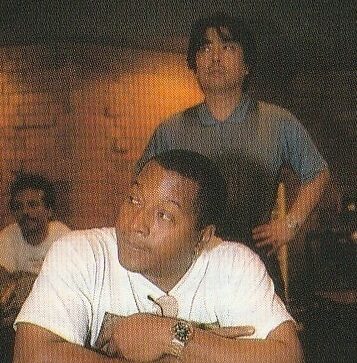
Tosco & Murakami
2012-current
Lost lives and battles in the shadows of history. We have not forgotten you.
*Loading ...*
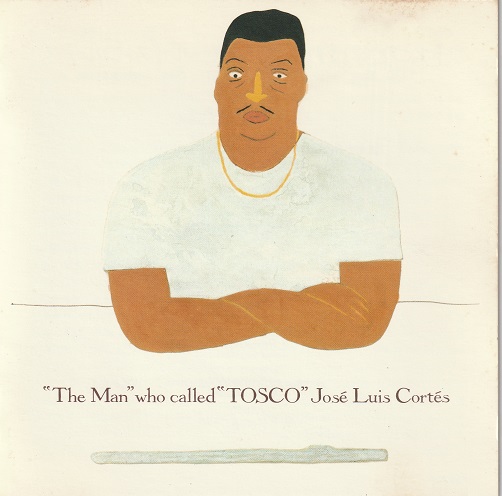
Cuban Music
2012-current
Lost lives and battles in the shadows of history. We have not forgotten you.
*Loading ...*
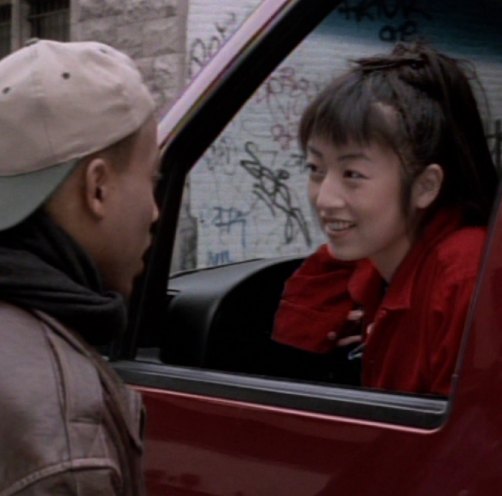
KYOKO
2012-current
Lost lives and battles in the shadows of history. We have not forgotten you.
*Loading ...*